


 Deutsch
 English
 Español
 Français
 Nederlands
 Português


 Share
Share




The Great Minerals War Begins
In early 2026, the United States launched the FORGE (Forum on Resource Geostrategic Engagement) alliance, bringing together 54 nations with a $30 billion financing package to counter China's escalating export controls on rare earths and critical minerals. Beijing's calibrated restrictions—covering seven heavy rare earths including dysprosium, terbium, and yttrium—have triggered sixfold price spikes outside China and slashed European licensing approval rates below 25%. With China controlling roughly 90% of global rare earth processing, the G7 subsequently set a binding target at its June 2026 summit in Évian, France: reduce dependence on any single non-G7 supplier below 60% by 2030. This article analyzes whether the Western counter-strategy—spanning new bilateral frameworks, stockpiling, and recycling capacity—can structurally challenge China's dominance within the critical 12-to-18-month window before further escalation.
Context: China's Calibrated Scarcity Strategy
China's export controls, introduced from late 2025 and tightened through early 2026, represent what analysts call a strategy of calibrated scarcity—temporary, reversible restrictions designed to maintain maximum leverage while discouraging Western investment in alternative supply chains. The controls cover rare earths, tungsten, and antimony, materials essential for defense systems, electric vehicle motors, wind turbines, and semiconductors. According to a multi-institutional analysis, over 80% of European companies depend on Chinese mineral supply chains, and licensing approval rates for European firms fell below 25% by early 2026.
The impact has been dramatic. Yttrium oxide prices outside China surged 140-fold to nearly $1,100/kg by May 2026, up from single digits before controls. Dysprosium oxide rose to approximately $1,450/kg (a 4-5x increase), while terbium oxide reached about $4,500/kg. Despite these price spikes, shipments of key heavy rare earths remain down roughly 50% compared to pre-restriction levels. The China rare earth export controls have sent shockwaves through global supply chains, particularly affecting Japan, which received only 4% of its dysprosium from China prior to the controls, and Germany, which received none.
The FORGE Alliance: A New Multilateral Framework
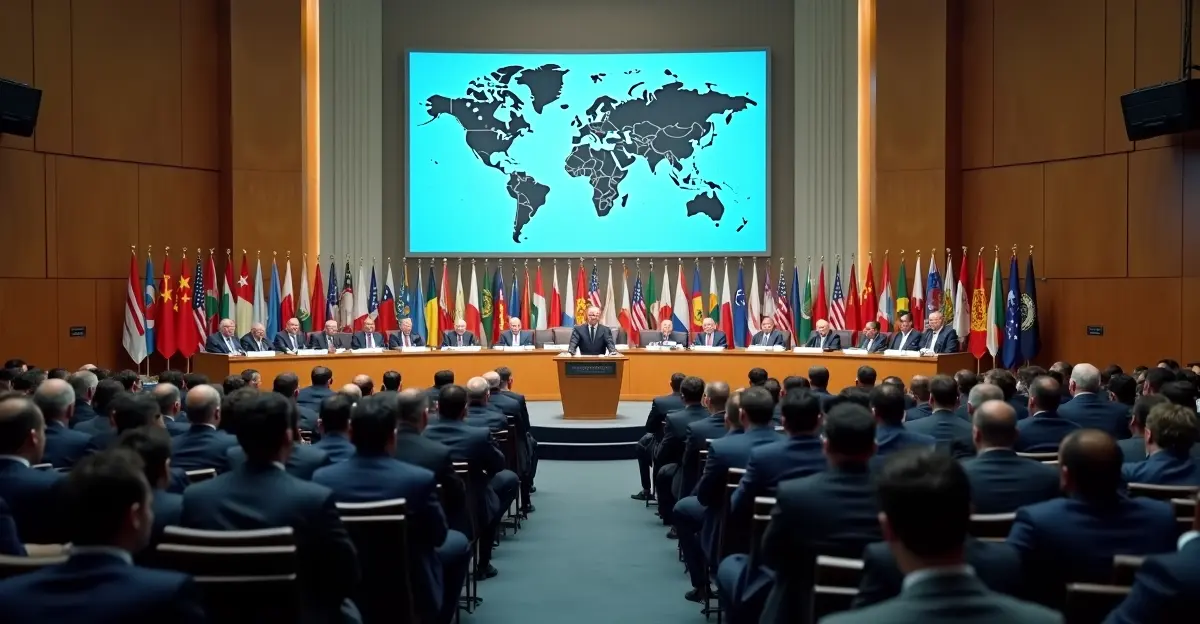
On February 4, 2026, the U.S. hosted the inaugural Critical Minerals Ministerial in Washington, led by Secretary of State Marco Rubio and Vice President JD Vance, with representatives from 54 countries and the European Commission. The centerpiece was the launch of FORGE, the successor to the Minerals Security Partnership, chaired initially by South Korea. FORGE creates a preferential trade-and-investment zone with coordinated price floors for critical minerals, aiming to reshape the global market away from concentration-driven supply chain risks.
Key outcomes of the ministerial included signing 11 new bilateral critical minerals frameworks or memoranda of understanding with countries such as Argentina, Morocco, and the Philippines. The U.S. Export-Import Bank approved $10 billion for Project Vault, establishing a domestic Strategic Critical Minerals Reserve that stores raw materials across secure U.S. facilities, with OEM partners including Clarios, GE Vernova, Western Digital, and Boeing. In total, over $30 billion in U.S. government financing support was unveiled for strategic minerals projects. The ministerial also emphasized private-sector collaboration, including through Pax Silica, to build secure, diversified, and resilient end-to-end supply chains.
Project Vault: A $10 Billion Stockpile
Project Vault represents the most ambitious U.S. government effort to create a strategic buffer against supply disruptions. The public-private partnership, backed by the Export-Import Bank, will stockpile critical minerals across secure domestic facilities. However, experts caution that stockpiling alone cannot solve the structural problem of processing dependence. As one analyst noted, "Stockpiles buy time, but they don't build capacity." The critical minerals stockpiling strategy is seen as a short-term hedge while longer-term processing investments are developed.
G7's Binding Target: Below 60% by 2030
At the June 2026 G7 summit in Évian, France, leaders agreed to a binding target: ensure no single non-G7 country supplies more than 60% of their rare earth and permanent magnet imports by 2030, with an ambition to reach 50% as soon as possible after 2030. The bloc announced 195 critical minerals projects representing $73.4 billion in investment since early 2026. A new G7 Critical Minerals Resilience and Production Alliance will coordinate policy, data sharing, stockpiling, and crisis response. The initiative includes pilot traceability mechanisms for lithium and nickel, and stronger coordination between development finance institutions, export credit agencies, and private capital.
The urgency is driven by China's impending reinstatement of export controls on rare earths critical to defense systems, set for November 2026. Rare earth permanent magnets—where China controls 95% of global production—are essential for drones, precision weapons, EVs, and wind turbines. If fully implemented, China's export controls could put up to $6.5 trillion of economic activity outside China at risk annually, according to industry estimates.
Can the West Break Dependence?
Despite the ambitious targets and substantial financing, the structural challenge remains daunting. Rebuilding independent Western processing capacity would take 20-30 years, far longer than the narrowing 12-18 month geopolitical window before further Chinese escalation. China's dominance is not just in mining but in the complex, energy-intensive processing stage—often called the "chemical bottleneck"—where it controls approximately 90% of global rare earth refining and 94% of permanent magnet production.
U.S. companies like USA Rare Earth and MP Materials are working to build domestic supply chains with federal incentives, but they face permitting delays, high costs, and technical hurdles. The Western rare earth processing challenges are compounded by environmental regulations and the lack of skilled labor in specialized chemical separation processes. Meanwhile, China continues to invest heavily in downstream processing capacity, further entrenching its advantage.
Expert Perspectives
Analysts are divided on the prospects for Western diversification. Some argue that the FORGE alliance and G7 targets represent a genuine shift in political will, backed by unprecedented financial commitments. "The scale of investment announced is historically significant," said one industry expert. "But the timeline for building real processing capacity is measured in decades, not years."
Others point to the possibility of a hybrid model—managed dependence combined with targeted independence for the most critical materials. "The West doesn't need to replace all Chinese processing capacity," argued a geopolitical analyst. "It needs to secure enough supply for defense and key technologies while accepting continued dependence for less critical applications." The geopolitical supply chain risks 2026 are forcing governments to make difficult trade-offs between cost, security, and speed.
FAQ
What is the FORGE alliance?
FORGE (Forum on Resource Geostrategic Engagement) is a 54-country multilateral framework launched by the U.S. in February 2026 to counter China's dominance over critical mineral supply chains. It creates a preferential trade zone with coordinated price floors and replaces the earlier Minerals Security Partnership.
What are the G7's new targets for rare earth dependence?
At the June 2026 G7 summit, leaders set a binding target to reduce reliance on any single non-G7 supplier of rare earths and permanent magnets to below 60% by 2030, with an ambition to reach 50% after 2030.
How much has China's export controls affected prices?
China's 2025-2026 export controls triggered sixfold price spikes for key rare earths. Yttrium oxide surged 140-fold to nearly $1,100/kg, dysprosium oxide rose 4-5x to ~$1,450/kg, and terbium oxide reached ~$4,500/kg.
Can the West build independent rare earth supply chains?
Experts estimate it would take 20-30 years to rebuild independent Western processing capacity, far longer than the 12-18 month window before potential further Chinese escalation. China controls 90% of global processing and 94% of permanent magnet production.
What is Project Vault?
Project Vault is a $10 billion U.S. Export-Import Bank-backed public-private partnership establishing the U.S. Strategic Critical Minerals Reserve, storing raw materials across secure domestic facilities with partners including Clarios, GE Vernova, Western Digital, and Boeing.
Conclusion: A Race Against Time
The FORGE alliance and G7 targets represent the most coordinated Western response to China's critical minerals dominance in decades. With $73.4 billion in announced projects and binding political commitments, the momentum is unprecedented. However, the structural reality of China's processing stranglehold means that meaningful diversification will take years, if not decades. The critical 12-to-18-month window before further Chinese escalation will test whether the West can translate political will into tangible supply chain resilience—or whether managed dependence becomes the default outcome of the Great Minerals War.


Follow Discussion